
halloween pathway markers can create a memorable seasonal look without making the garden pathway harder to live with. The strongest version uses black, warm amber, muted orange, stone gray, and dark green in a controlled way, then relies on scale, texture, and lighting rather than a large number of props. That approach gives the Halloween theme a clear identity while protecting the normal function of the space.
This guide focuses on a wayfinding interpretation built around metal stakes, painted wood, lanterns, stone, gravel, and pumpkins. You will see ten image-led ideas that explain where to place the focal point, how to repeat color, how to preserve circulation, and how to make the styling look believable in daylight and after dark. The aim is a home that feels seasonal, practical, and intentionally designed rather than temporarily crowded.
How to Use halloween pathway markers Without Overdoing It
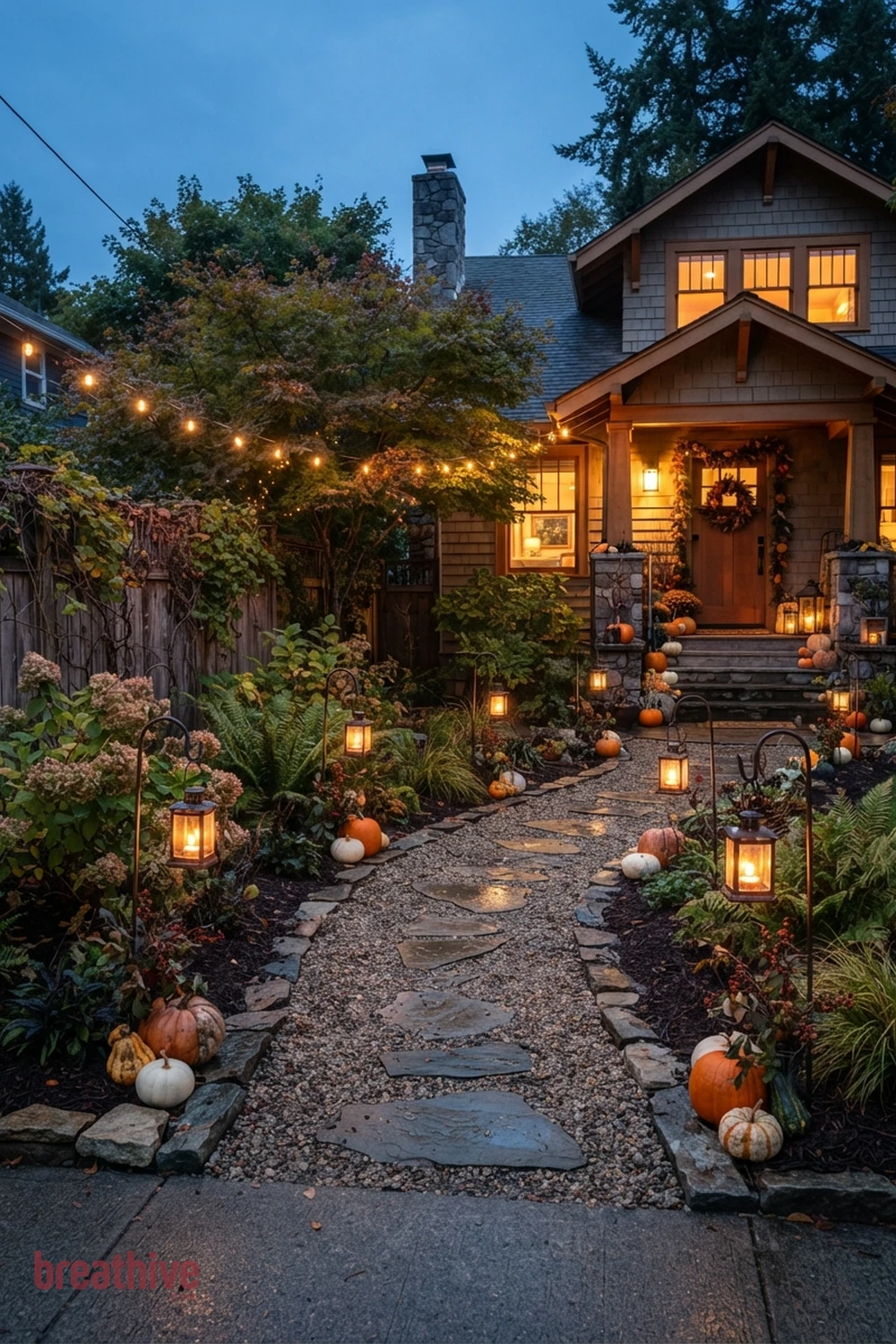
This image focuses on wide exterior setup showing the seasonal concept within the real yard, planting, path, and house context. The arrangement keeps the garden pathway readable by using black, warm amber, muted orange, stone gray, and dark green as a controlled visual system instead of filling every available surface. Notice how clear path edges, repeated rhythm, and safer nighttime circulation creates hierarchy while open.
To recreate this idea, begin with the largest practical surface or boundary in the garden pathway, then add only the pieces needed to support wide exterior setup showing the seasonal concept within the real yard, planting, path, and house context. Keep the black, warm amber, muted orange, stone gray, and dark green palette consistent so the eye reads the arrangement as one composition. Mix metal stakes, painted wood, lanterns, stone, gravel, and pumpkins for enough texture, but repeat at least one finish or color three times so the scene does.
Path and Arrival
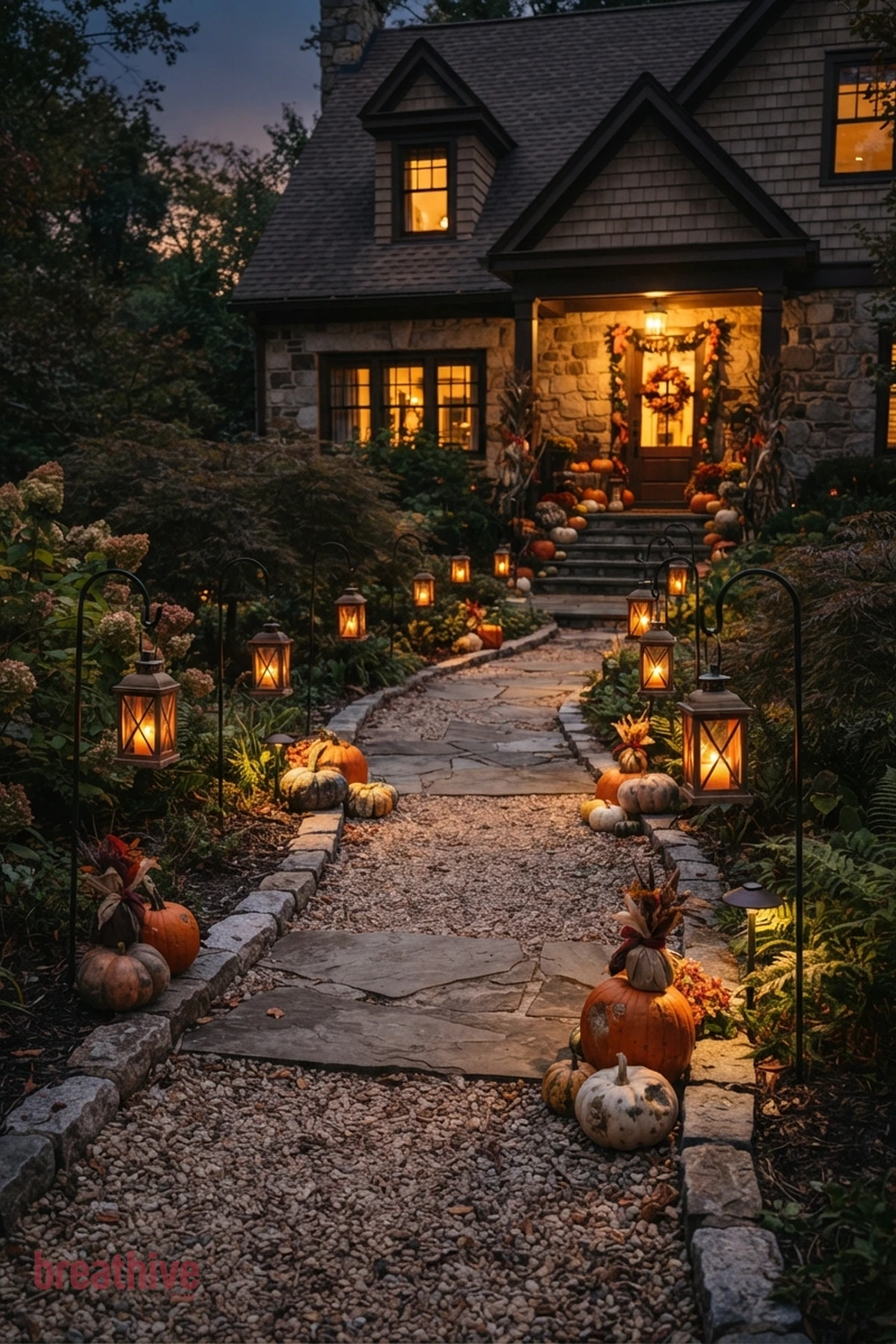
This image focuses on walkway view showing how the decoration guides movement toward the house. The arrangement keeps the garden pathway readable by using black, warm amber, muted orange, stone gray, and dark green as a controlled visual system instead of filling every available surface. Notice how clear path edges, repeated rhythm, and safer nighttime circulation creates hierarchy while open space supports movement and normal.
Scale matters more than quantity here. Use one medium or large anchor, then build outward with two or three smaller accents connected to walkway view showing how the decoration guides movement toward the house. In a real garden pathway, the arrangement should still make sense when someone walks through, sits down, opens a door, prepares food, or cleans the space. The black, warm amber, muted orange, stone gray, and dark green colors give the Halloween theme enough identity, while metal stakes, painted wood, lanterns, stone, gravel, and pumpkins prevent the.
Primary Focal Display
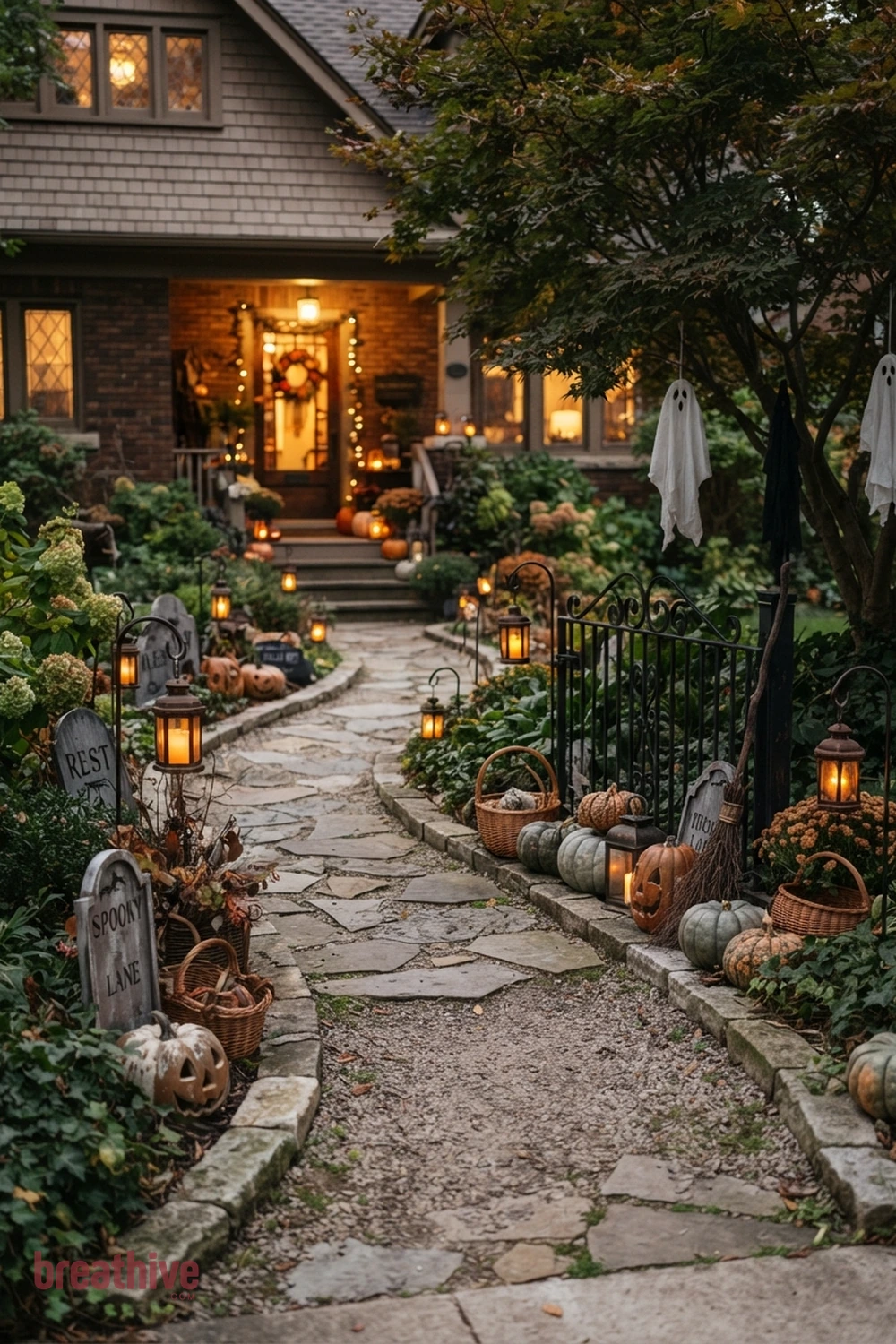
This image focuses on main outdoor decorative scene positioned where it can be seen clearly without blocking circulation. The arrangement keeps the garden pathway readable by using black, warm amber, muted orange, stone gray, and dark green as a controlled visual system instead of filling every available surface. Notice how clear path edges, repeated rhythm, and safer nighttime circulation creates hierarchy while open space supports.
A useful way to judge this setup is to step back and look at the negative space around it. main outdoor decorative scene positioned where it can be seen clearly without blocking circulation becomes stronger when the surrounding garden pathway is not competing for attention. Build the arrangement with black, warm amber, muted orange, stone gray, and dark green, then vary surface character through metal stakes, painted wood, lanterns, stone, gravel, and pumpkins. Keep tall items behind or beside lower pieces so important sightlines remain open. For homes with children.
Weather-Ready Detail
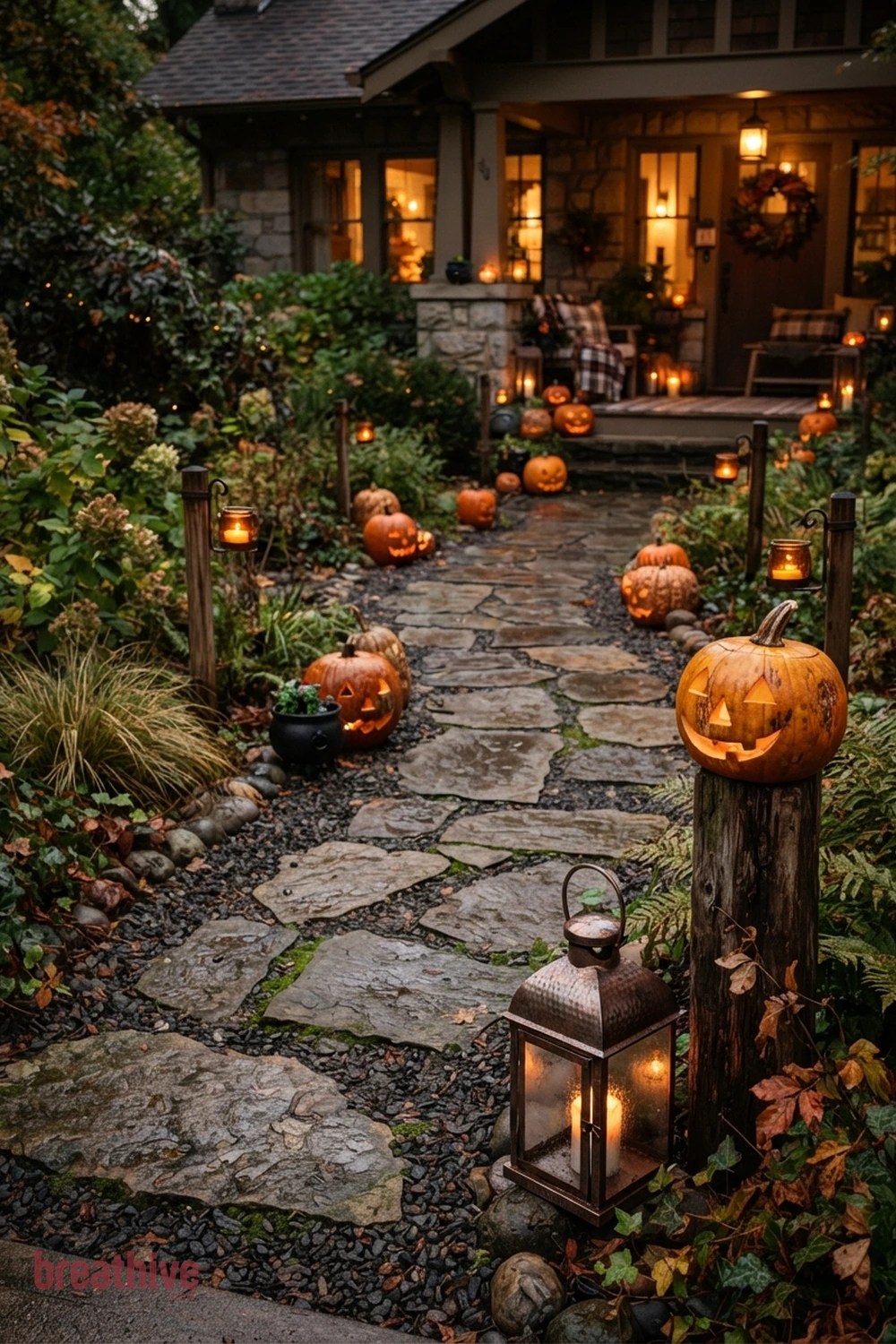
This image focuses on close-up of outdoor materials, anchors, props, foliage, and finishes that look believable outside. The arrangement keeps the garden pathway readable by using black, warm amber, muted orange, stone gray, and dark green as a controlled visual system instead of filling every available surface. Notice how clear path edges, repeated rhythm, and safer nighttime circulation creates hierarchy while open space supports movement.
To recreate this idea, begin with the largest practical surface or boundary in the garden pathway, then add only the pieces needed to support close-up of outdoor materials, anchors, props, foliage, and finishes that look believable outside. Keep the black, warm amber, muted orange, stone gray, and dark green palette consistent so the eye reads the arrangement as one composition. Mix metal stakes, painted wood, lanterns, stone, gravel, and pumpkins for enough texture, but repeat at least one finish or color three times so the scene does not feel accidental.
Landscape Integration
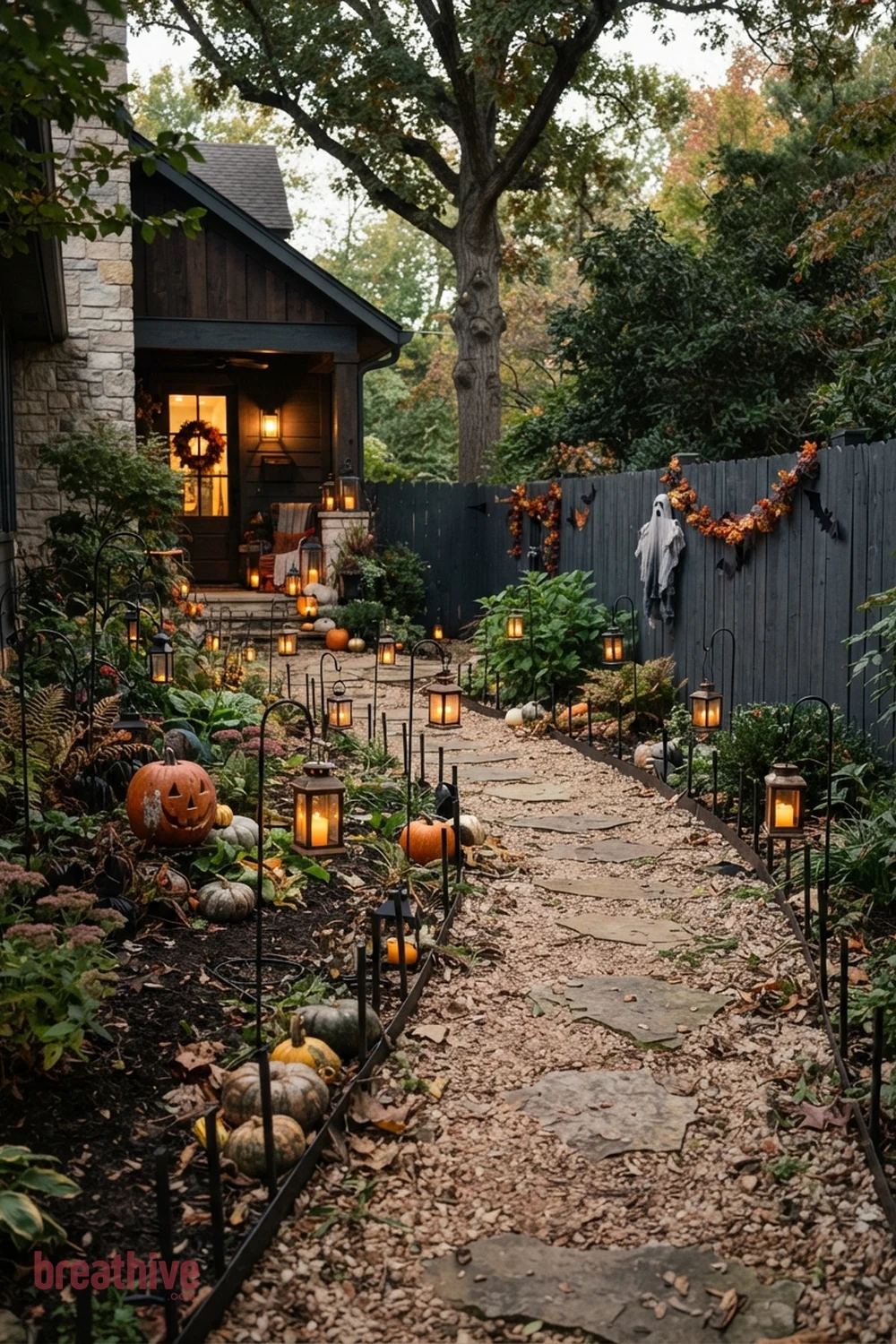
This image focuses on garden bed, tree, fence, or lawn edge with seasonal decor integrated into existing landscape. The arrangement keeps the garden pathway readable by using black, warm amber, muted orange, stone gray, and dark green as a controlled visual system instead of filling every available surface. Notice how clear path edges, repeated rhythm, and safer nighttime circulation creates hierarchy while open space supports.
Scale matters more than quantity here. Use one medium or large anchor, then build outward with two or three smaller accents connected to garden bed, tree, fence, or lawn edge with seasonal decor integrated into existing landscape. In a real garden pathway, the arrangement should still make sense when someone walks through, sits down, opens a door, prepares food, or cleans the space. The black, warm amber, muted orange, stone gray, and dark green colors give the Halloween theme enough identity, while metal stakes, painted wood, lanterns, stone, gravel, and.
Night Lighting Mood
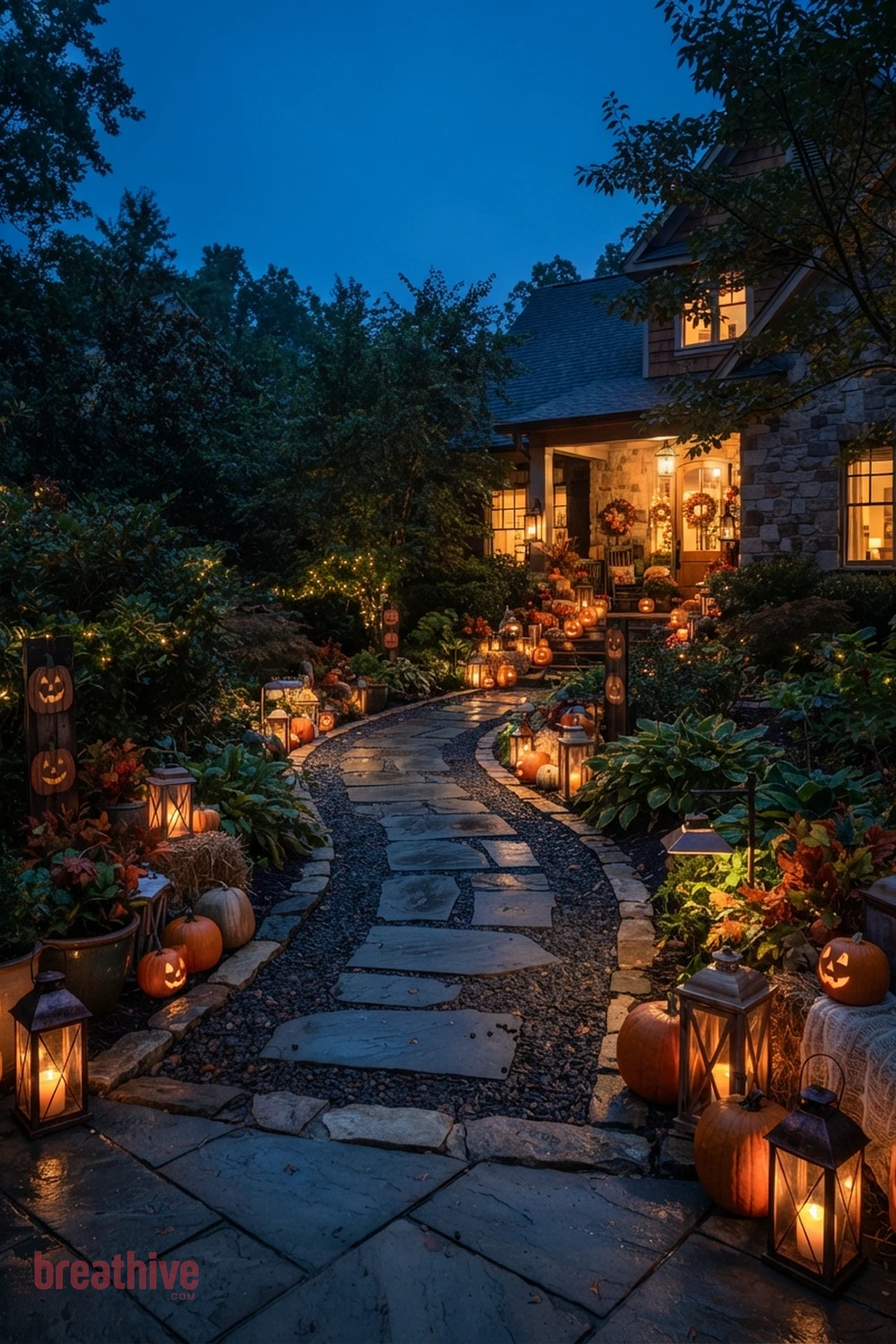
This image focuses on outdoor setup after dusk using practical, path-safe lighting and visible depth. The arrangement keeps the garden pathway readable by using black, warm amber, muted orange, stone gray, and dark green as a controlled visual system instead of filling every available surface. Notice how clear path edges, repeated rhythm, and safer nighttime circulation creates hierarchy while open space supports movement and normal.
A useful way to judge this setup is to step back and look at the negative space around it. outdoor setup after dusk using practical, path-safe lighting and visible depth becomes stronger when the surrounding garden pathway is not competing for attention. Build the arrangement with black, warm amber, muted orange, stone gray, and dark green, then vary surface character through metal stakes, painted wood, lanterns, stone, gravel, and pumpkins. Keep tall items behind or beside lower pieces so important sightlines remain open. For homes with children, pets, frequent guests.
Compact Yard Version
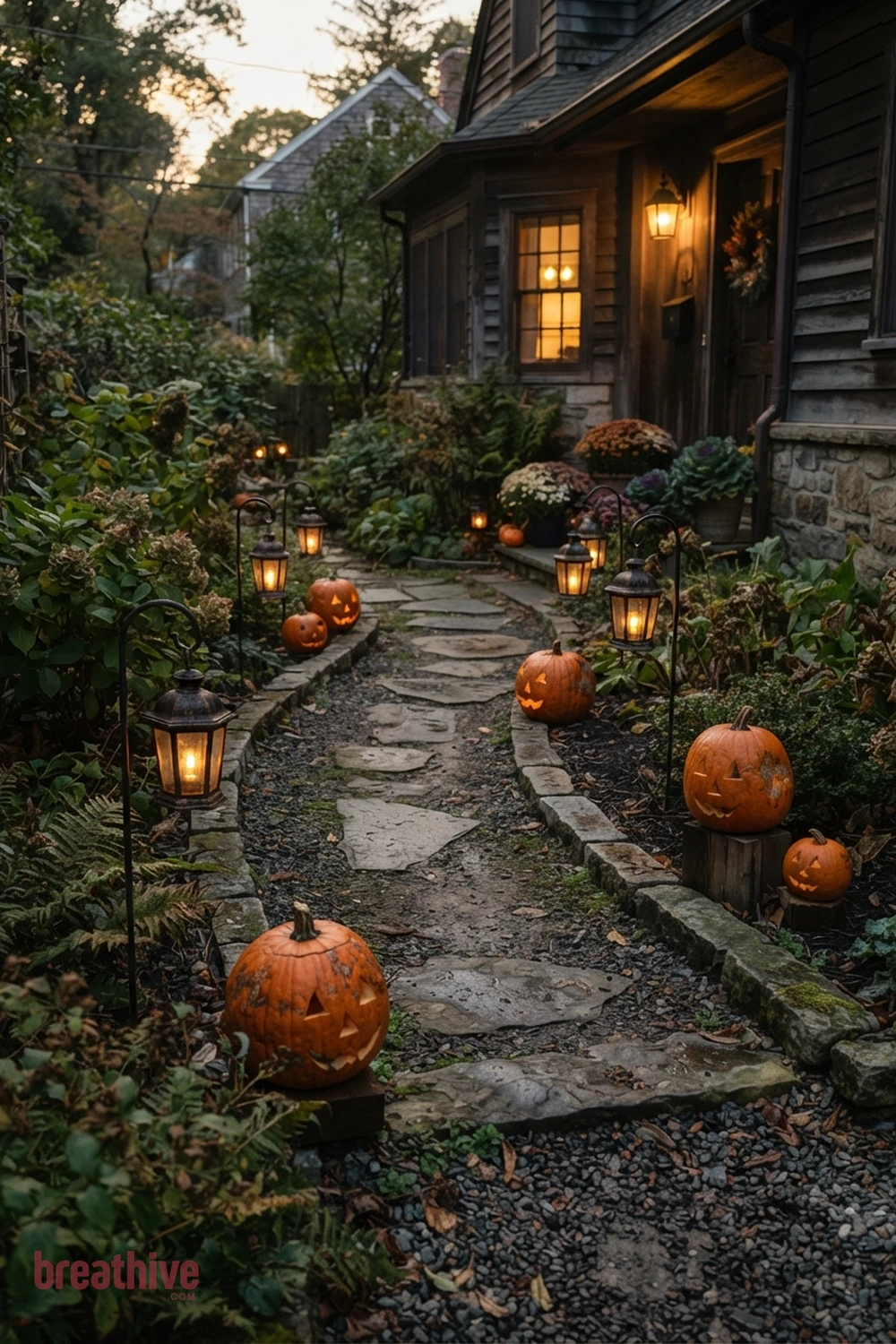
This image focuses on small front yard or narrow side path using fewer pieces with stronger placement. The arrangement keeps the garden pathway readable by using black, warm amber, muted orange, stone gray, and dark green as a controlled visual system instead of filling every available surface. Notice how clear path edges, repeated rhythm, and safer nighttime circulation creates hierarchy while open space supports movement.
To recreate this idea, begin with the largest practical surface or boundary in the garden pathway, then add only the pieces needed to support small front yard or narrow side path using fewer pieces with stronger placement. Keep the black, warm amber, muted orange, stone gray, and dark green palette consistent so the eye reads the arrangement as one composition. Mix metal stakes, painted wood, lanterns, stone, gravel, and pumpkins for enough texture, but repeat at least one finish or color three times so the scene does not feel accidental.
Layered Depth
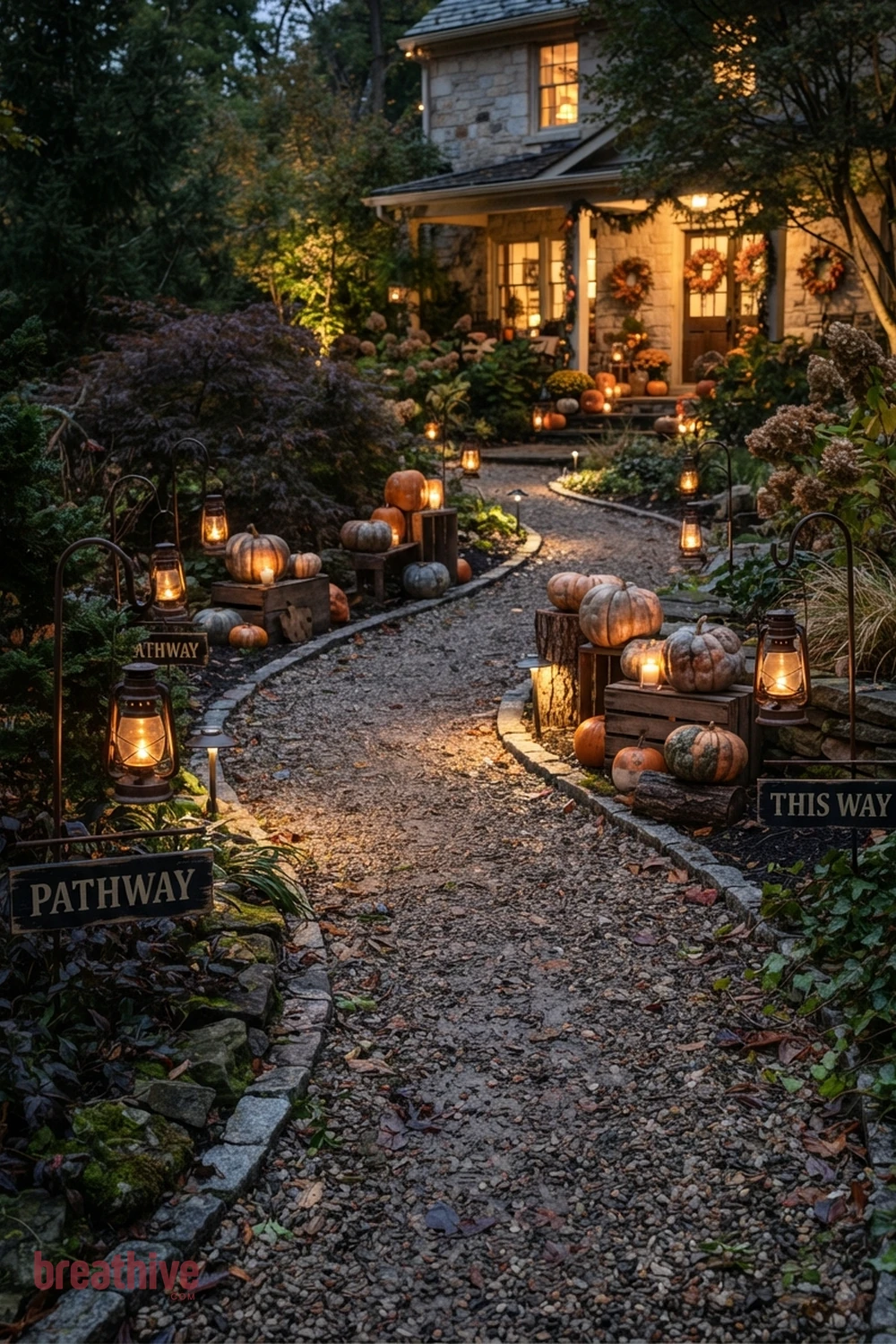
This image focuses on foreground, middle-ground, and background seasonal elements creating depth without clutter. The arrangement keeps the garden pathway readable by using black, warm amber, muted orange, stone gray, and dark green as a controlled visual system instead of filling every available surface. Notice how clear path edges, repeated rhythm, and safer nighttime circulation creates hierarchy while open space supports movement and normal daily.
Scale matters more than quantity here. Use one medium or large anchor, then build outward with two or three smaller accents connected to foreground, middle-ground, and background seasonal elements creating depth without clutter. In a real garden pathway, the arrangement should still make sense when someone walks through, sits down, opens a door, prepares food, or cleans the space. The black, warm amber, muted orange, stone gray, and dark green colors give the Halloween theme enough identity, while metal stakes, painted wood, lanterns, stone, gravel, and pumpkins prevent the setup.
Close-Up Prop Story
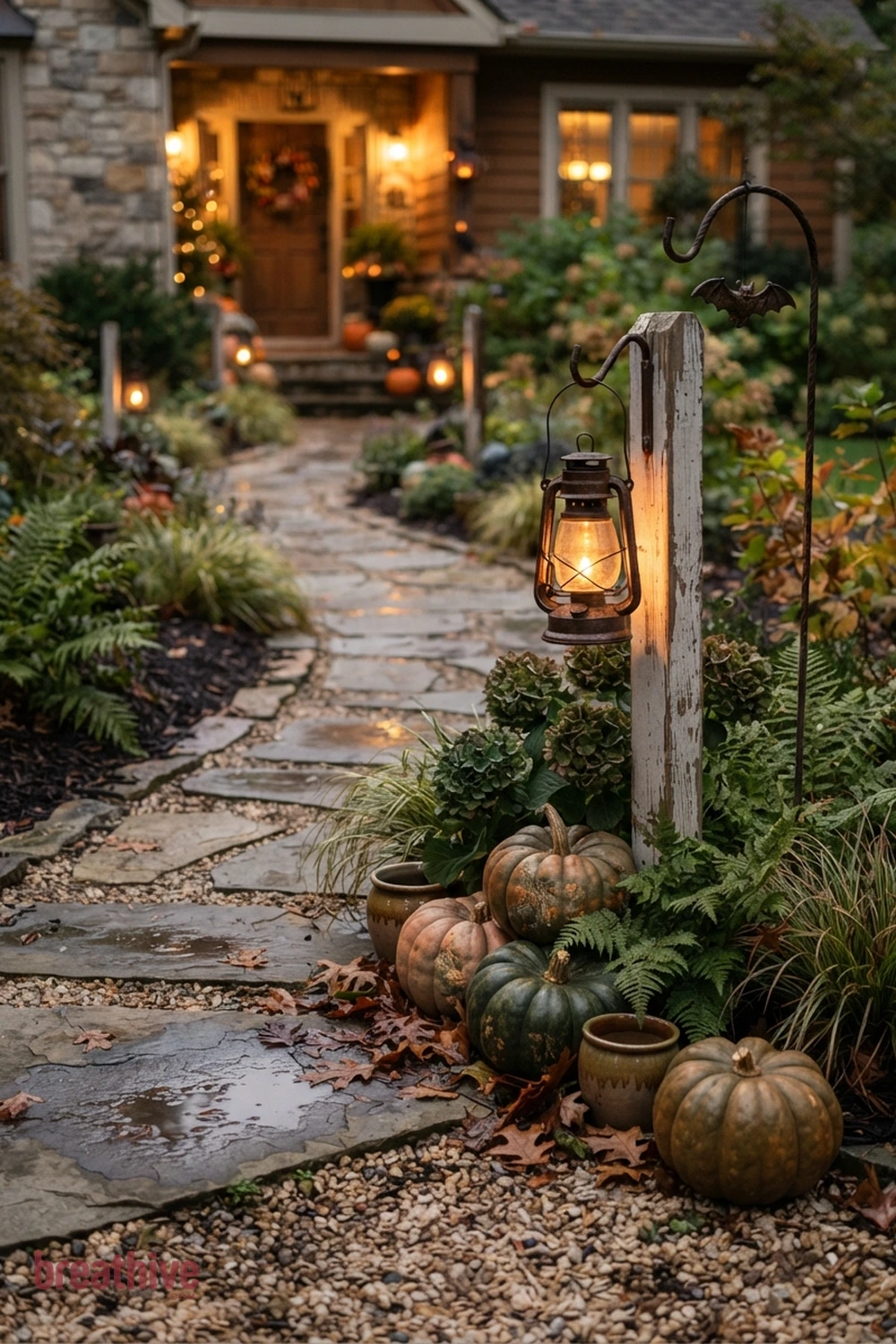
This image focuses on close view of one prop cluster showing texture, scale, anchoring, and relation to plants or hardscape. The arrangement keeps the garden pathway readable by using black, warm amber, muted orange, stone gray, and dark green as a controlled visual system instead of filling every available surface. Notice how clear path edges, repeated rhythm, and safer nighttime circulation creates hierarchy while open.
A useful way to judge this setup is to step back and look at the negative space around it. close view of one prop cluster showing texture, scale, anchoring, and relation to plants or hardscape becomes stronger when the surrounding garden pathway is not competing for attention. Build the arrangement with black, warm amber, muted orange, stone gray, and dark green, then vary surface character through metal stakes, painted wood, lanterns, stone, gravel, and pumpkins. Keep tall items behind or beside lower pieces so important sightlines remain open. For homes.
Featured Vertical Exterior
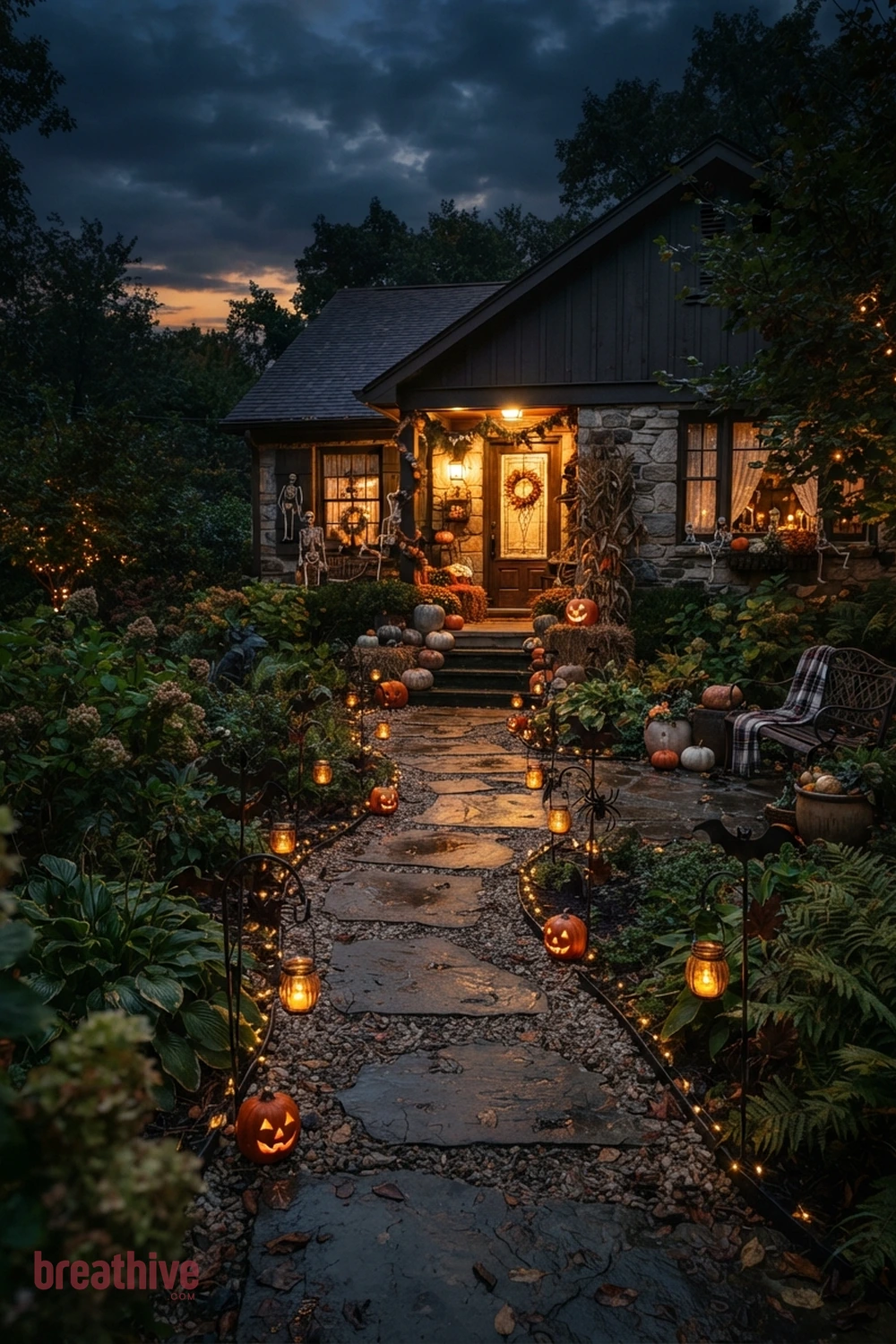
This image focuses on portrait-oriented full outdoor scene with clear path, focal decor, and house context. The arrangement keeps the garden pathway readable by using black, warm amber, muted orange, stone gray, and dark green as a controlled visual system instead of filling every available surface. Notice how clear path edges, repeated rhythm, and safer nighttime circulation creates hierarchy while open space supports movement and.
To recreate this idea, begin with the largest practical surface or boundary in the garden pathway, then add only the pieces needed to support portrait-oriented full outdoor scene with clear path, focal decor, and house context. Keep the black, warm amber, muted orange, stone gray, and dark green palette consistent so the eye reads the arrangement as one composition. Mix metal stakes, painted wood, lanterns, stone, gravel, and pumpkins for enough texture, but repeat at least one finish or color three times so the scene does not feel accidental. The.
Practical Planning Before You Decorate
Before buying or making anything, photograph the garden pathway from the main approach and from the angle you use most often. Mark the areas that must stay clear, including doors, drawers, chair pullback zones, walking paths, switches, vents, and cleaning routes. Then choose one primary focal zone and one secondary supporting zone. This prevents the Halloween theme from spreading into every surface. With a wayfinding scheme, limiting the palette to black, warm amber, muted orange, stone gray, and dark green also makes inexpensive pieces feel more coordinated because the eye notices repetition before it notices price.
Think about maintenance as part of the design. Outdoor pieces need stable placement and weather awareness, while indoor surfaces should remain easy to wipe, dust, or reset. Use metal stakes, painted wood, lanterns, stone, gravel, and pumpkins where they make sense, but avoid fragile items near high-traffic edges. If the setup will stay in place for several weeks, leave enough breathing room to clean around it. Good seasonal styling should survive ordinary life. When clear path edges, repeated rhythm, and safer nighttime circulation, the result feels intentional even if the number of decorations is relatively small.
Frequently Asked Questions
How can I make halloween pathway markers look more cohesive?
Choose a limited palette such as black, warm amber, muted orange, stone gray, and dark green, then repeat two or three materials across the main focal areas. Keep one dominant shape or color in each zone and leave visible negative space between groups. Cohesion comes from repetition and proportion, not from matching every object.
How many Halloween decorations should I use?
There is no fixed number. Start with one anchor piece and two or three supporting accents in each important zone of the garden pathway. Stop when the focal point is clear and circulation still feels easy. Adding more after that often reduces impact rather than improving it.
What is the easiest way to make the display feel more expensive?
Improve placement before buying more pieces. Use varied height, better spacing, consistent black, warm amber, muted orange, stone gray, and dark green colors, and warm practical lighting. Combine a few tactile surfaces such as metal stakes, painted wood, lanterns, stone, gravel, and pumpkins. A controlled composition usually looks more refined than a larger collection of unrelated decorations.
How do I keep Halloween decor practical for everyday use?
Protect the functions you use every day. Keep walking lines, seating, prep areas, handles, switches, and storage access clear. Favor stable grouped arrangements instead of many loose items. If children or pets use the space, move fragile or easily pulled pieces away from edges and low traffic zones.
Final Thoughts
The best halloween pathway markers are not the ones with the most decorations. They are the ones that make the Halloween idea easy to understand while the garden pathway still feels comfortable, usable, and connected to the rest of the home. Start with one image idea from this guide, build around clear path edges, repeated rhythm, and safer nighttime circulation, and adjust the amount of decor to your own space. A smaller, better-edited arrangement will usually create a stronger seasonal mood than filling every available surface.